Advertisement
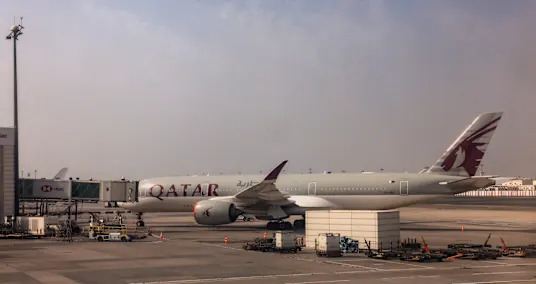
The Iran war is reshaping international aviation, with Gulf carriers forced to cancel tens of thousands of flights while rivals from Europe and Asia pick up some of the slack.
Around 1.7 million weekly seats have been removed from the region’s airline schedules so far, equal to around a third of prewar capacity, according to industry analysts OAG.
Saudi-based airlines are operating near-normal schedules, but the larger carriers in Qatar and the UAE are not. Qatar Airways is seeking lower aircraft rental payments as a way to reduce costs, Bloomberg reported. Airlines from other regions, including British Airways, Germany’s Lufthansa, and Hong Kong-based Cathay Pacific have cut back on services to the Gulf or pulled out entirely. At the same time, some have increased capacity on direct Asia-Europe routes that bypass the Gulf, although it is hard to make significant additions quickly, and at affordable prices for passengers.

LATEST POSTS
- 1
 AI is making spacecraft propulsion more efficient – and could even lead to nuclear-powered rockets
 - 2The Main 15 Powerful Business Heads of Today
- 3Like 'accelerating from stationary to supersonic flight': Europe's Hera probe boosts speed, stays on course for November asteroid rendezvous
- 4‘Trip of suffering’: Gaza evacuee details 24-hour journey to South Africa
- 5Sean Penn lights up, Kylie Jenner gets A-list approval and 7 other moments you didn’t see at the Golden Globes





- 4 astronauts are now on their path to the moon. Here’s what happens next
- Under pressure at home, Belgium's leader treads a tight rope with EU partners over funds for Ukraine
- Satellite observations offer insight into a tsunami's early stages
- Understanding climate change in America: Skepticism, dogmatism and personal experience
- James Webb Space Telescope watches our Milky Way galaxy's monster black hole fire out a flare
- 7 Heavenly Espressos, One Do You Like?
- Top 10 Smash hit Computer games of the Year
- Figure out How to Forestall Tooth Staining
- Climate leaders are talking about 'overshoot' into warming danger zone. Here's what it means